Introduction
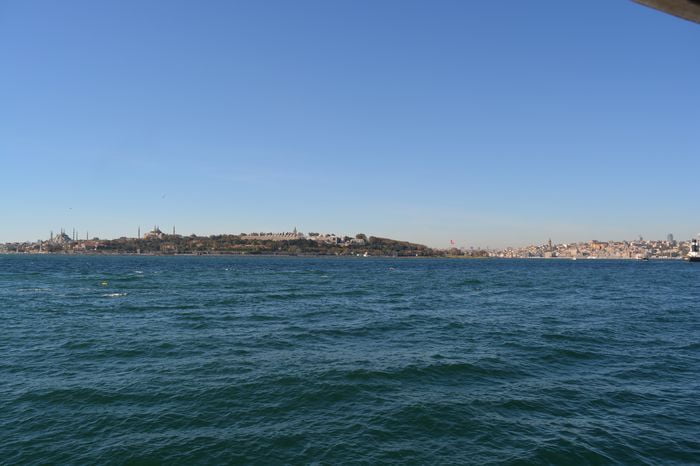
When historians discuss the route used by the Ottoman ships during the siege of Constantinople in 1453, one important theory is the Dolmabahçe route. This route suggests that the ships were taken from the Bosporus, pulled over the hills, and launched into the Golden Horn. Several strong historical sources support this view. These sources describe the exact location where the ships began their journey over land, and their descriptions point clearly to the area of Beşiktaş, known in Byzantine times as the Diplokionion Comparing the Two Routes for Transporting the Ships.
Statements from Byzantine and Western Historians
One of the strongest arguments in favor of the Dolmabahçe route comes from the writings of Critobulus, a contemporary historian of the siege. Critobulus clearly states that the ships began their overland journey from a point on the Bosporus called the Diplokionion. This name was used in Byzantine times to describe the area now known as Beşiktaş.
Another historian, Ducas, supports this view. He describes the starting point as being east of Galata and below the Diplokionion. This geographical description matches the coastline near modern-day Dolmabahçe and Beşiktaş, rather than areas farther north such as Tophane.
The Twin Columns as a Landmark
Additional confirmation comes from Pusculus, who refers to the starting point as being close to the twin columns. These columns were a well-known landmark in the Diplokionion area. His Latin phrase explains that the columns rose high and were visible from afar. This detail helps historians locate the area more precisely and again points to Beşiktaş rather than any other location along the Bosporus.
The Account of Nicolo Barbaro
The Venetian eyewitness Nicolo Barbaro gives one of the clearest and most detailed descriptions. According to him, the Ottoman fleet gathered near the columns by the shore. From this point, Sultan Mehmed II ordered the road across the hill above Pera (Galata) to be leveled. Barbaro explains that the work began directly from the shoreline and continued up and over the hill. This description matches the natural slope and terrain between Dolmabahçe and Galata Bulgaria Tours.
Identifying the Diplokionion
A crucial point in this discussion is the correct identification of the Diplokionion. Some have mistakenly placed it at Tophane, but historical and archaeological evidence shows that the Diplokionion was actually located at Beşiktaş. Therefore, the harbor connected with the Diplokionion must have been the bay that once existed where Dolmabahçe Palace now stands.
When the accounts of Critobulus, Ducas, Pusculus, and Nicolo Barbaro are examined together, they form a consistent and convincing picture. All of them place the starting point of the ship transfer near the Diplokionion, close to the twin columns, and east of Galata. Since the Diplokionion was located at Beşiktaş, the most logical conclusion is that the ships began their journey from the Dolmabahçe–Beşiktaş shoreline. For this reason, the Dolmabahçe route remains one of the strongest and best-supported theories regarding the movement of the Ottoman fleet during the siege of Constantinople.